Status triggers
Leasing, maintenance, renewal, vacancy, repair approval, and open-issue events that should create an owner-facing update.
Owner communication
EMC2Ops helps property teams send proactive owner updates from real workflow data instead of rewriting the same status notes manually.
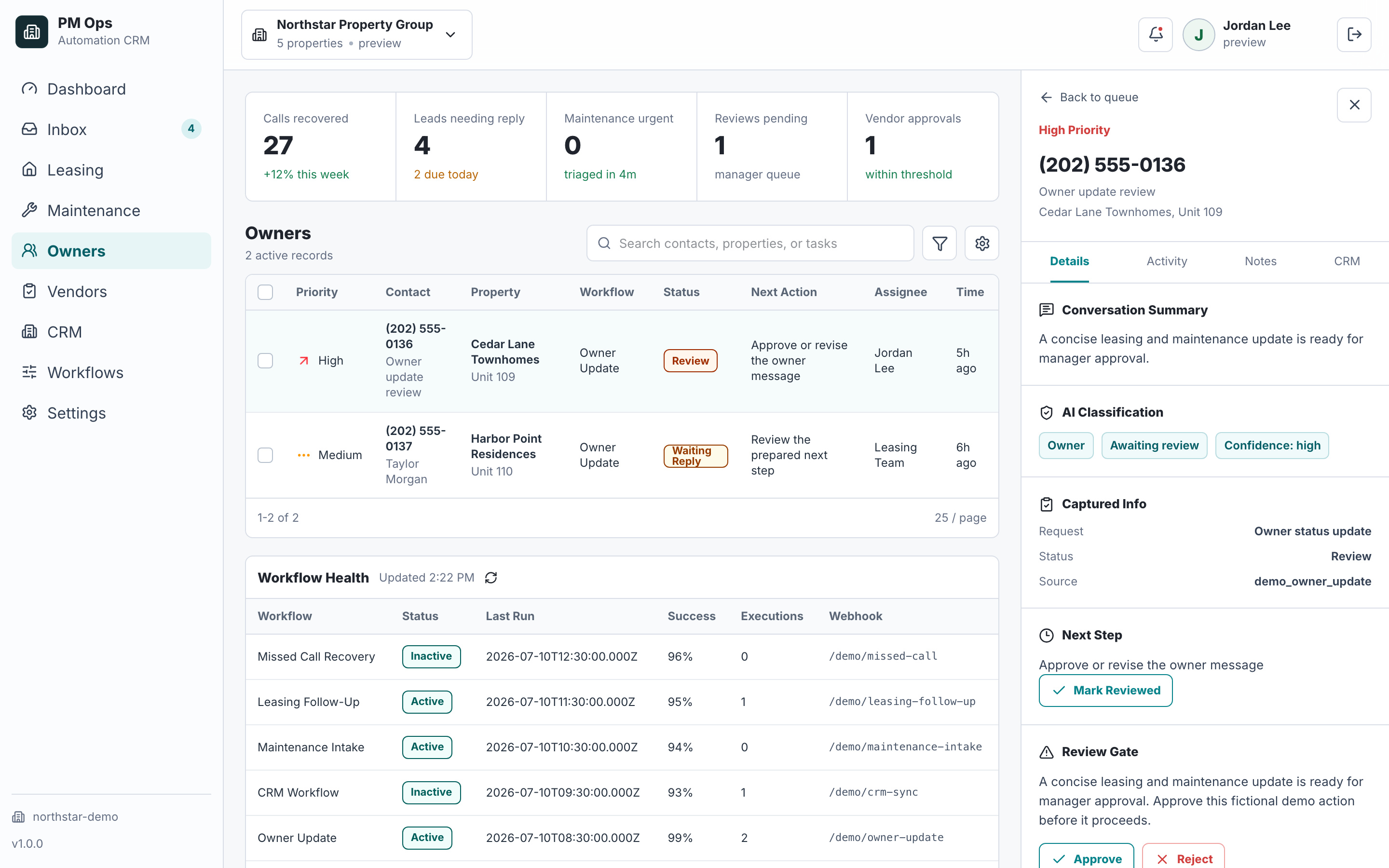
We identify repeatable owner-update moments, the source data behind them, which messages need approval, and how completed updates should be logged.
Send structured owner updates before owners have to ask.
Summarize leasing, maintenance, and renewal progress.
Keep sensitive exceptions routed to staff for review.
Audit deliverables
Each install is scoped around concrete triggers, captured fields, automations, writebacks, stop rules, and escalation paths.
Leasing, maintenance, renewal, vacancy, repair approval, and open-issue events that should create an owner-facing update.
Property, owner, issue status, renter or resident context, next step, approval need, and sensitive details to exclude.
Drafts, reminders, approval queues, and send rules matched to owner communication policies.
Sent status, reviewer, timestamp, summary, and next follow-up logged to your CRM, inbox, or property management system.
Suppression for sensitive updates, active staff conversations, already-sent notices, legal questions, and owner opt-outs.
Human review for costs, complaints, delays, approval requests, financial issues, and relationship-sensitive messages.
Operator brief
Most owner updates are assembled from facts the team already recorded: the last leasing activity, the repair status, the approval still needed, the person responsible, and the promised next check-in. The waste comes from finding those facts again and turning them into a readable message every time an owner asks.
An owner-ready note can state the inquiry count, tours completed, applications in progress, current asking rent, and next follow-up date. It should not claim a likely lease or recommend a pricing change unless the responsible manager has approved that judgment.
The useful update names the issue, evidence received, quote amount, approval threshold, resident impact, and decision deadline. The workflow can prepare and log that summary; the owner or manager still makes the spending decision.
When a vendor misses the promised completion date, the next message should explain what changed, who is following up, and when the owner will hear back. A generic “still in progress” email hides the operating problem instead of reducing it.
Human boundary: Owner-update automation is best for verified status and agreed next steps. Financial interpretation, disputes, complaints, legal questions, material delays, and relationship-sensitive explanations remain review-required messages.
Workflow audit
We will map the recurring owner questions, status triggers, review gates, and logging path that can safely become an update workflow.
Operational change
Qualification
No. Use automation for repeatable status updates and keep human review for sensitive, financial, or relationship-heavy messages.
Yes. Approval steps are recommended when the message affects owner trust, cost, or policy.
Next step
Bring your process and software. In a 15-minute consultation, we’ll outline the build, required access, approvals, and next steps.
Hi — I’m the EMC2Ops assistant. I can answer questions, discuss the workflow you want to automate, or get a consultation on the calendar.
What brings you here?